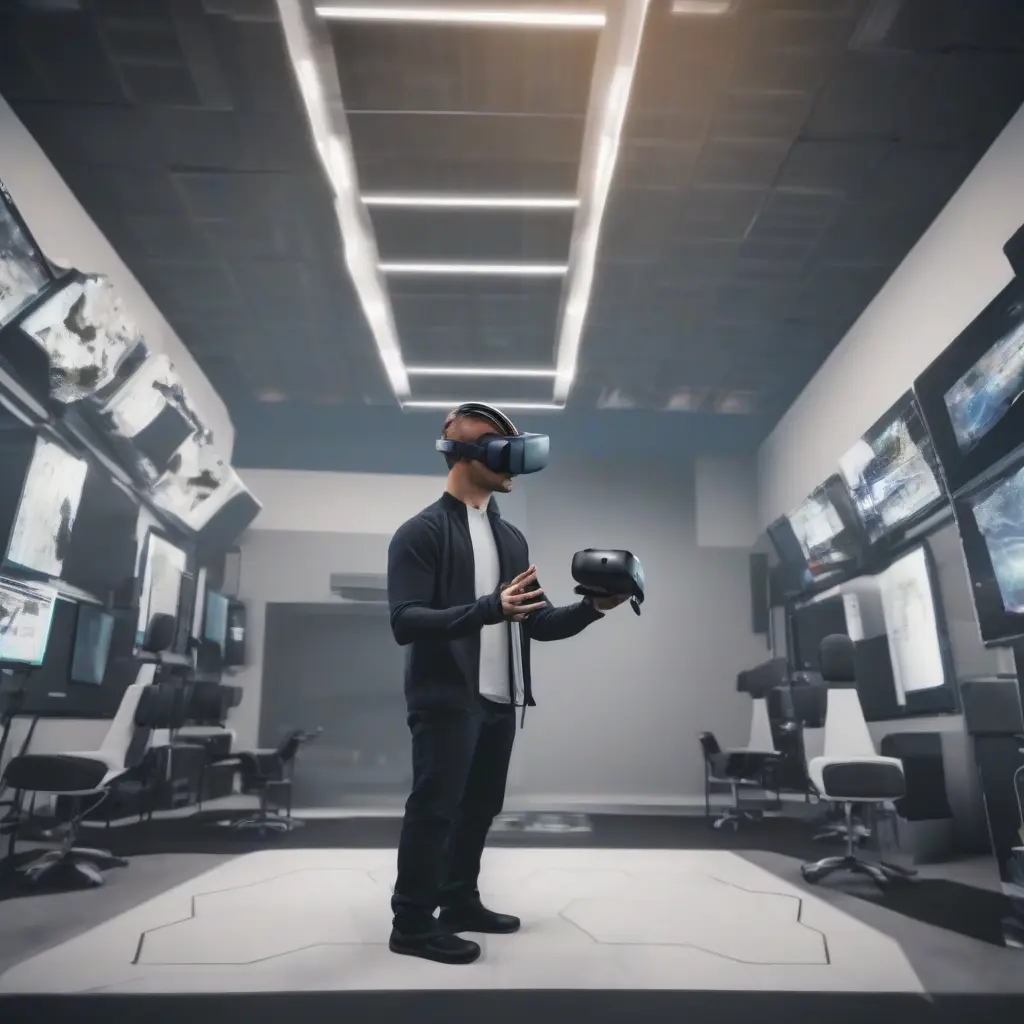
Virtual reality (VR) is no longer confined to the realm of gaming; it is making significant inroads into various industries by revolutionizing training and simulation processes. With its immersive capabilities, VR provides realistic environments that enhance learning efficiency and retention. This technology is proving especially beneficial in sectors where traditional training methods are limited, such as healthcare, aviation, the military, and education. The integration of VR not only cuts costs associated with training but also improves safety and effectiveness, paving the way for a new era in professional skill development.
Enhancing Healthcare Training with Virtual Reality
In the healthcare sector, virtual reality is transforming the way medical professionals are trained. Medical students and professionals can practice complex surgeries in a risk-free environment that closely simulates real-life scenarios. This approach allows trainees to make mistakes without harming patients, thus boosting their confidence and skills. VR simulations are utilized for various medical procedures, from surgery to patient assessments, ultimately improving outcomes and patient care. By providing an interactive platform, VR enhances knowledge retention and allows for repetitive practice, making it an invaluable tool in healthcare education.
Revolutionizing Aviation Training
The aviation industry has long relied on simulation for pilot training, and virtual reality is taking this to new heights. VR provides pilots with realistic flight environments that mimic various conditions they may encounter during actual flights. This technology allows for comprehensive training on equipment and emergency situations without the risks associated with real-life flying. Additionally, employing VR in aviation training reduces costs significantly as it can eliminate the need for extensive fuel and maintenance expenses of traditional flight simulators. As a result, airlines are increasingly adopting VR to ensure pilot proficiency and safety.
Military Applications of Virtual Reality
The military has been early adopters of virtual reality for training purposes, utilizing it for simulations that enhance soldier preparedness and tactical decision-making. VR enables military personnel to experience various battlefield scenarios without the associated dangers of real combat. From weapons training to strategic planning exercises, virtual environments allow for immersive learning experiences. This advanced training technology also allows for assessments to be conducted in real-time, enabling instant feedback and improvement, thus ensuring soldiers are better prepared for actual missions in unpredictable environments.
Virtual Reality in Education: New Learning Paradigms
Education is experiencing a significant transformation through virtual reality, which complements traditional teaching methods by providing experiential learning opportunities. VR engages students by allowing them to explore historical sites, conduct science experiments, or immerse themselves in literature like never before. This interactive approach boosts enthusiasm and motivation while catering to various learning styles. Schools and universities are leveraging VR to create fully immersive educational programs, enhancing engagement and fostering critical thinking skills. The technology not only makes learning fun but also offers educational experiences that are otherwise impossible in conventional settings.
Corporate Training Innovations Through VR
Virtual reality is reshaping corporate training by allowing employees to engage in realistic simulations that enhance skill development and team collaboration. Companies are using VR to provide immersive onboard experiences for new hires and conducting training scenarios that mirror real workplace challenges. This innovative approach helps improve soft skills like communication and problem-solving in a controlled but realistic environment. Furthermore, VR training can be tailored to match specific corporate goals, making employee training more cost-effective and engaging, thus leading to improved job performance and employee satisfaction.
Challenges and Limitations of VR Training
While virtual reality offers numerous benefits, there are challenges and limitations that cannot be ignored. High initial costs for setup, equipment, and ongoing maintenance can deter some organizations from implementing VR solutions. Additionally, not all trainees may respond positively to virtual environments, potentially leading to discomfort such as motion sickness. Companies must also ensure that VR content is regularly updated to remain relevant and effective. Balancing the investment with tangible outcomes is crucial for organizations that wish to adopt VR as a training tool, making pilot programs a common approach before full implementation.
Future Trends in Virtual Reality Training
As technology advances, the future of virtual reality in training and simulation looks promising. Emerging trends indicate a shift towards integrating artificial intelligence with VR to create adaptive learning environments that respond to individual needs. This combination can enhance real-time feedback mechanisms, offering tailored experiences that can elevate skill acquisition. Furthermore, the expansion of 5G technology will enable more seamless, high-quality VR experiences, encouraging broader adoption across different sectors. As organizations recognize the value of immersive learning, the demand for VR solutions is expected to grow, leading to innovations that further enhance educational and training outcomes.
Conclusion
In conclusion, virtual reality is fundamentally revolutionizing training and simulation across various industries by offering immersive, cost-effective, and safe learning environments. As organizations increasingly adopt this technology, they are experiencing improved efficiency, enhanced skill acquisition, and better preparedness for real-world scenarios. Despite the challenges that come with its implementation, the continued advancements in VR technology suggest a future where training becomes more interactive and impactful, ultimately leading to heightened performance across diverse fields.